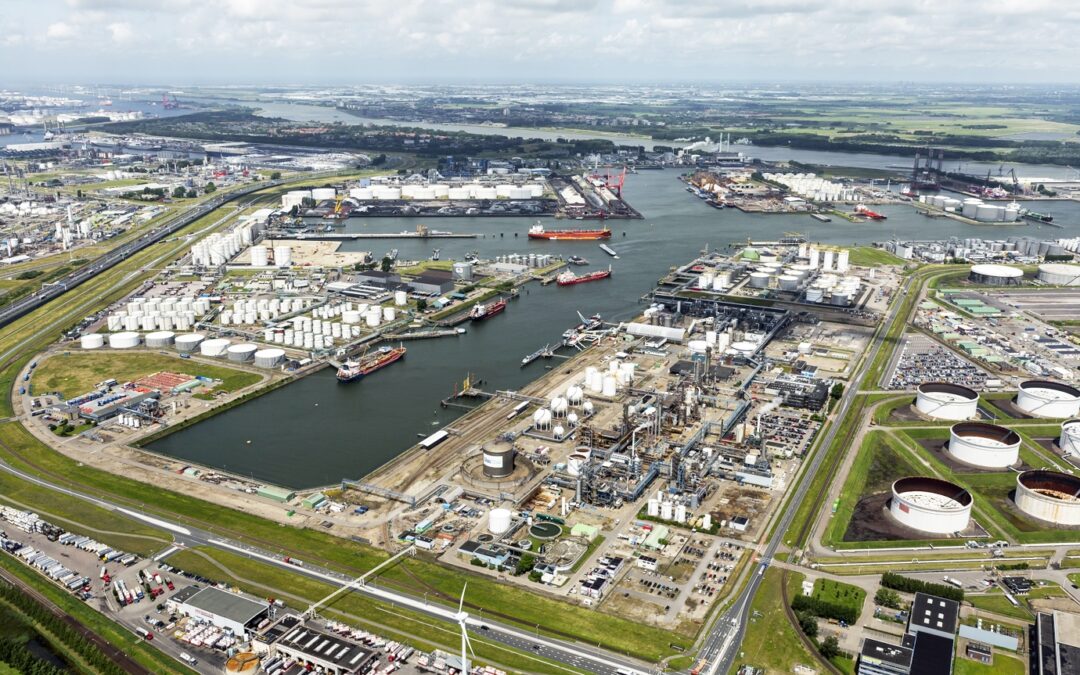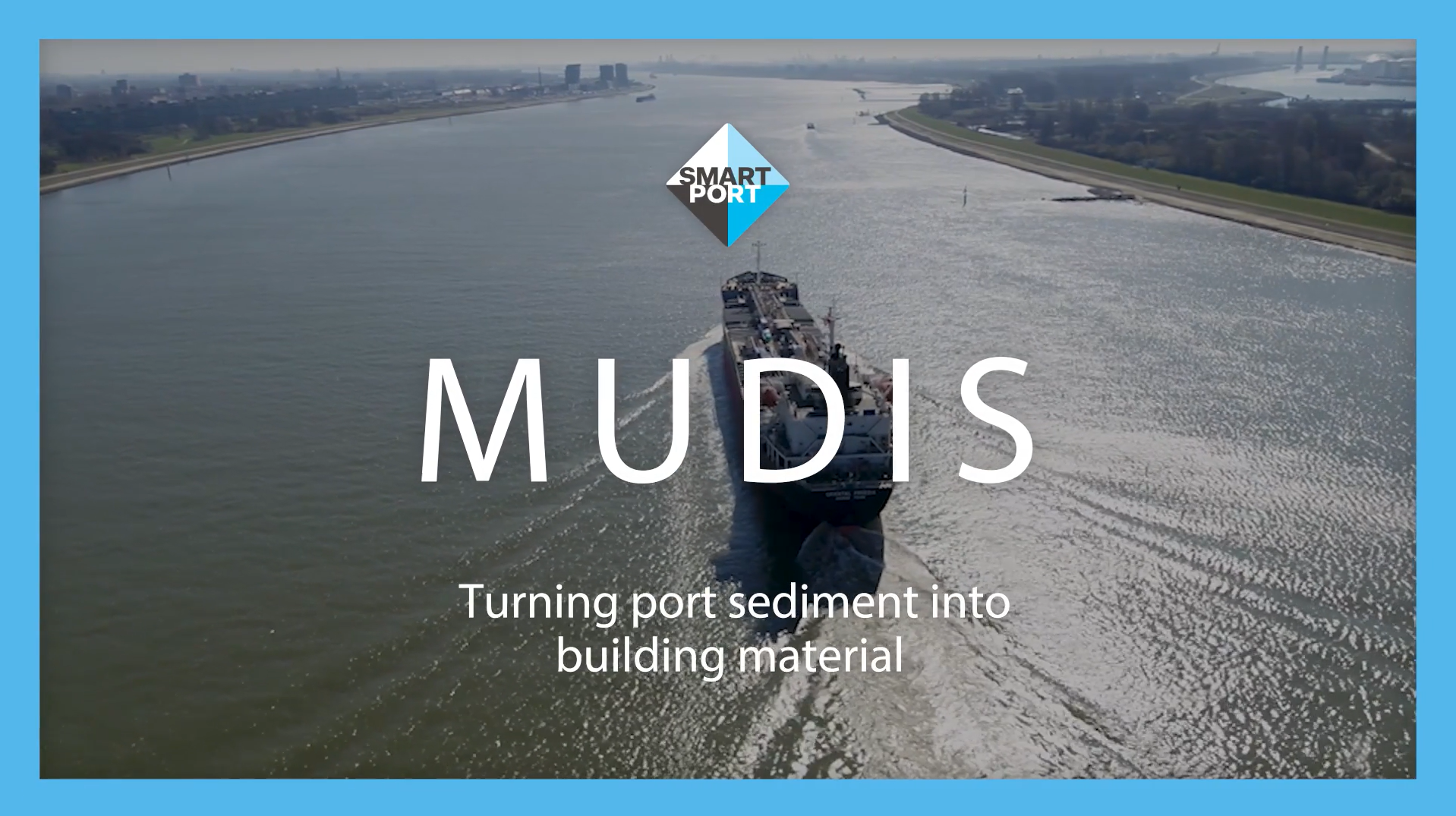
Every year, ports like Rotterdam dredge millions of cubic metres of sediment from their access channels and basins to keep them navigable. Today, that sediment is mostly disposed offshore. But what if it could become a resource for building applications instead?
That question is at the heart of MUDIS, a research project in which TU Delft, Port of Rotterdam Authority, Harwich Haven Authority, Netics, Kaumera and SmartPort are investigating whether dredged sediment can be turned into bricks. Instead of firing or using cement, the sediments are bound using Kaumera, a bio-based binder recovered from wastewater treatment. This could potentially save on CO2-emissions in the production process.
In this SmartPort Explains video, we take you into the TU Delft labs where researchers Alex Kirichek, Caroline Grilo and Annu Mathew are drying, mixing, moulding and testing the first sediment-based bricks — and explain why dredged mud behaves so differently from the clay bricks are normally made of.
The team is now working towards a mix with the right mechanical properties, aimed at applications such as facing bricks, partition walls or dike reinforcement. The next step is comparing these bricks with conventional bricks on strength, costs and CO₂-emissions. First results are expected in February 2027.
More information
For more information, please contact Wiebe de Boer (project developer Future-proof Port Infrastructure at SmartPort).