A new study by the Erasmus Commodity & Trade Centre (ECTC) and the Centre for International Energy Policy (CIEP) explores the potential for importing low-emission ammonia from the U.S. Gulf Coast (USGC) to the Amsterdam–Rotterdam–Antwerp (ARA) region. The project was funded by SmartPort, Erasmus Trustfonds, and Resilient Delta. Its findings are especially relevant for the Port of Rotterdam, which could play a major role in supplying cleaner fuels and feedstocks to Europe. Download the report here.
Four advantages
According to the study, this transatlantic route is promising for four key reasons: the USGC and ARA regions are strongly connected industrial hubs; Europe needs more renewable molecules for its energy transition; Europe does not produce enough ammonia while the U.S. has a surplus; and shipping costs and risks on this route are relatively low.
Early-stage market
Still, the ammonia market is only just beginning to develop. Price formation, infrastructure, and regulations are not yet fully in place while, at the same time, today’s geopolitical tensions make secure access to clean energy even more important.
The study presents four possible future scenarios, with slower, delayed growth currently seen as the most likely. To help the market grow, the report calls for more infrastructure, clear and consistent regulation, and market arrangements that benefit the trading in low-emission ammonia.
Rotterdam’s position
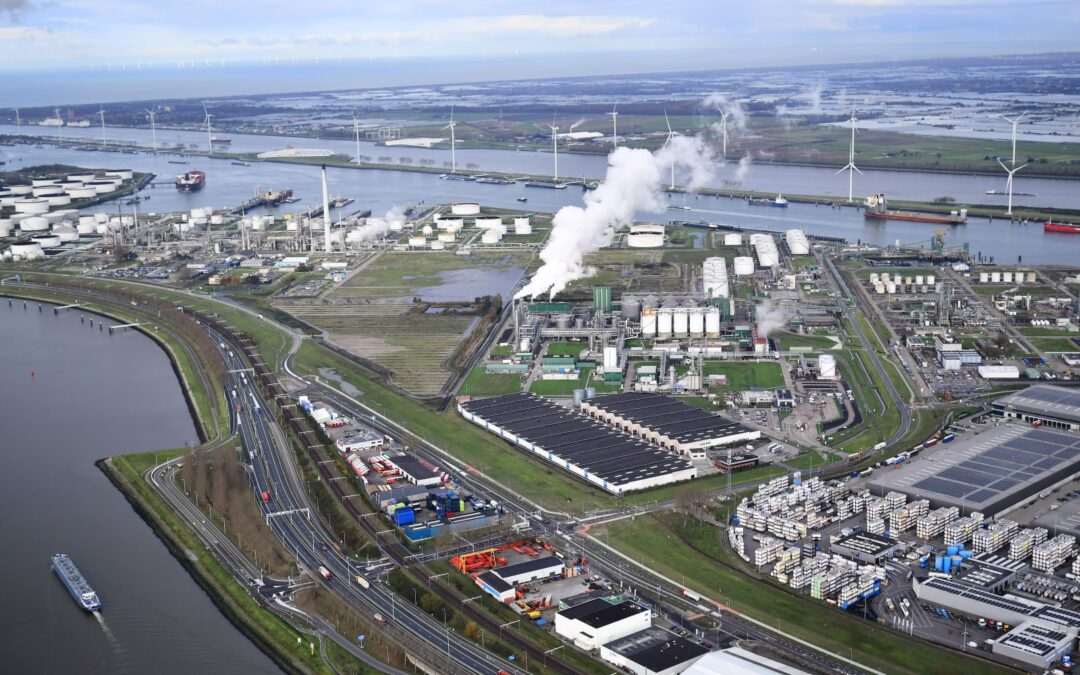
The study also finds that the Port of Rotterdam is one of the best-positioned ports in Northwest Europe to handle future ammonia imports. Its size, strong industrial base, and excellent links to inland demand centres give it a clear advantage.
And as ammonia continues to play a key role in fertiliser production and gains new uses – such as marine fuel, co-firing in power plants, and converting ammonia into hydrogen, Rotterdam is well placed to bring these clean molecules into Europe.
Conclusion
The key recommendation for all stakeholders is to be adaptive. With the right enabling conditions, Rotterdam could play a role in ammonia similar to the one it has played in LNG: starting small but growing into a crucial gateway for Europe’s energy system.
More information
For more information, please contact Julia Straathof (Project Developer Smart Energy & Industry at SmartPort), Wouter Jacobs (Executive Director at Erasmus Commodity & Trade Centre) or Pier Stapersma (Director at CIEP).